


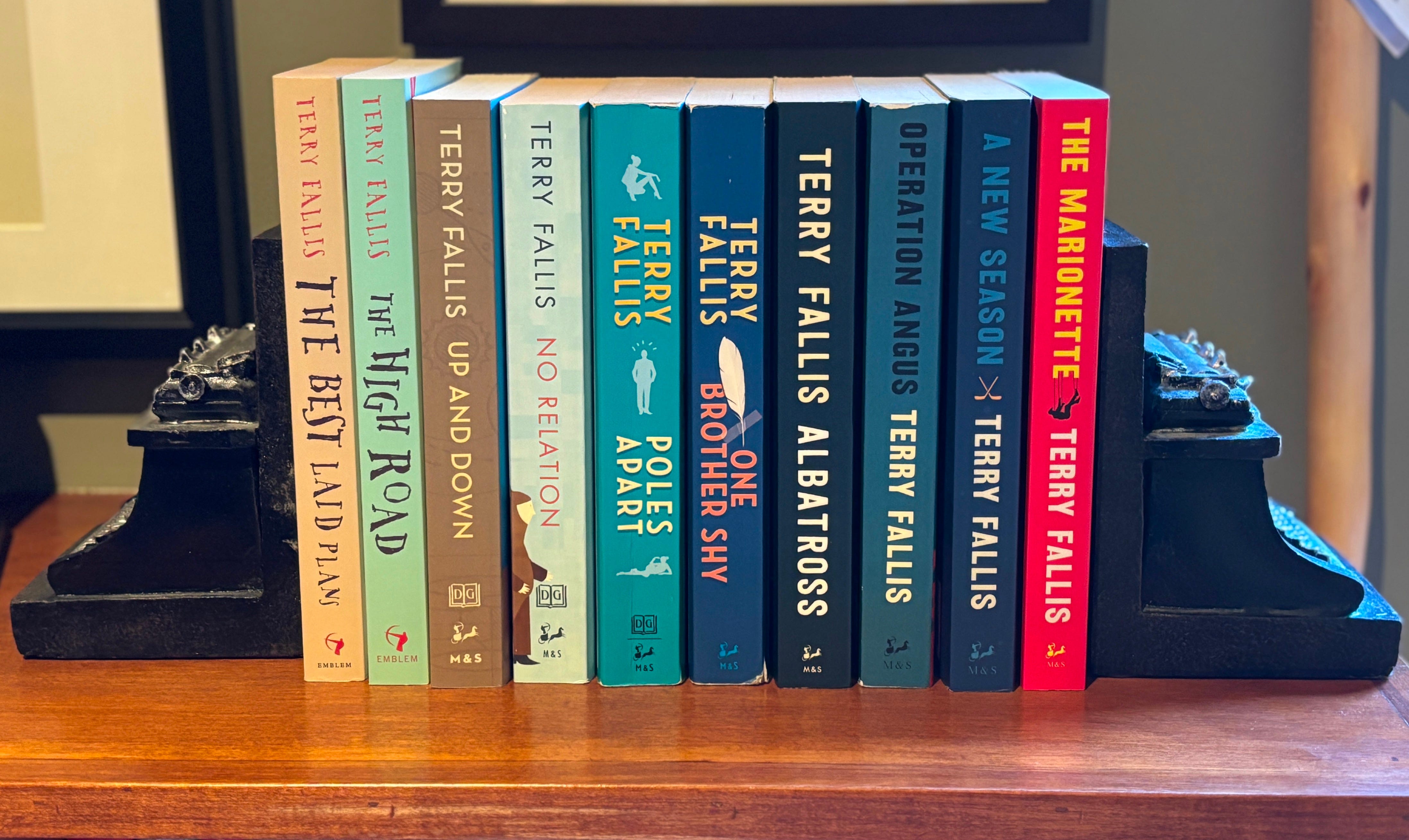
I found it when writing my first novel. And I’ve stuck with it in nearly every one of my novels since. Back in 2007, I’m quite sure my friends and family figured out the secret as soon as they started listening to the podcast edition of my debut novel, The Best Laid Plans, or reading it when it became a book later that year. But readers who don’t know me personally probably don’t know—hence this post.
The narrative voice
“Narrative voice” is a writerly term that members of the scribe tribe toss around quite often. I guess it really means, the tone, personality, perspective, even values of the story’s narrator as reflected in his/her voice. The reader is taking in the story through the eyes of the narrator, particularly when it’s written in the first person. Just to be clear—because sometimes, perhaps often, I fear I am not—the narrator’s voice is the novel’s “narrative voice.”
Choosing the narrative voice in a writing project is a critical decision that greatly influences how readers will connect and engage with the story. Many writers agonize about this question, and sometimes end up writing and then rewriting their story a few times, trying out different narrative voices before they make a final call.
The narrative voice should feel authentic
But I think it’s fair to say that an important goal in making this choice is for the reader to believe the narrative voice. In other words, the narrative voice should ring true. The narrative voice should be “authentic”—another writerly buzzword. It’s tough for readers to embrace and believe a narrative voice that does not feel authentic, that somehow feels false.
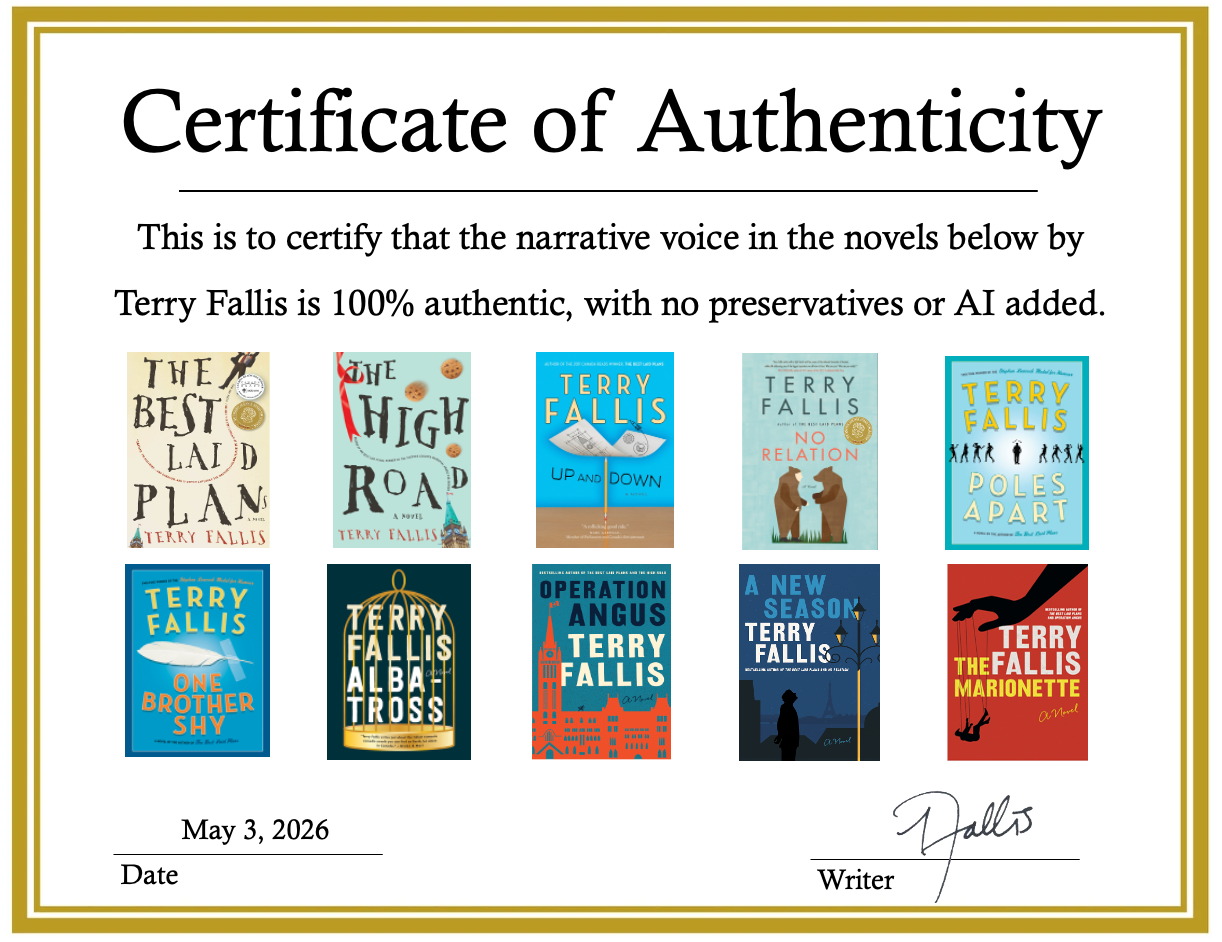
Why do I think/hope the narrative voice in my novels comes across as authentic? Well, that’s the writerly secret to which the title of this post refers. And it’s also why those who know me have likely already figured it out.
The not so big reveal…
I lend my own voice to my narrators. Yes, I tend to write in my own voice.
Again, to be clear, I’m not writing about me. My novels are not autobiographical. I’m never a character in my novels, let alone the lead. But I just find it easier to write with authority and conviction and, yes, authenticity—there’s that word again—when I write in my own voice. So, my narrators just happen to have a voice that often sounds a little or a lot like mine even though they often don’t behave, act, or think the way I might.
But why make this choice? Well, my own voice is the one I know best of all. I’ve had 66 years and counting to get to know it. It’s hard to write any other way but authentically and naturally when you’re writing in your own voice.
So far, my youngest narrator is 17 years old in Albatross. My oldest narrator is 62 years old in A New Season. Yet, apart from some nuanced language to account for a teenage voice versus a sixty-something voice, these two narrators—and the other ones, too—borrow a version of my voice. (Now you know why my friends and family often comment that reading my novels feels like I’m telling them a story over the dinner table.)
When readers and aspiring writers ask how I came up with my narrator’s voice in one of my novels—and I’m asked various versions of that question often at book talks and writers’ festivals—part of me is tempted to concoct some complex literary theory that leads me to my narrator’s voice. But I can’t bring myself to do that—not that I could credibly come up with such a convincing response in the first place. So, I do what writers should always do—I just tell the truth, even if it feels a little lame. So I say something like: “I want my narrator’s voice to sound natural, real, authentic, and believable, and I find it easier to achieve that if I write from a position of strength and confidence and use a voice with which I am wholly familiar. I use a version of my own voice.”
Then don’t my narrators all seem like the same person?
I hope not, but that is a risk. They may occasionally sound like the same person, but on the whole, I don't think they seem like the same person. A character is made up of much more than a voice. The setting, the other characters, the story, and an host of other factors, all shape our perceptions of the narrator—and everyone else in the novel, for that matter. As well, my narrators don’t look the same, don’t behave the same, don’t like or hate the same things, don’t carry the same views, don’t have the same life experiences. But, granted, they do sometimes sound similar. I’m prepared to make that editorial concession to help ensure that the voice in each novel sounds real, authentic, and believable.
Having said that, some would say my narrators often share similar values, and that could seem to some readers to be a thread of continuity across my novels. Okay, fair point. I’m hard pressed to argue with that.
What about my other characters’ voices?
I, like most writers, strive to write distinctive characters who are not all cut from the same cloth. If there’s a risk that readers might think my narrators sound a lot alike, then it seems to me I bear a greater onus to make my supporting cast in each novel distinct and to the extent possible, unlike the other players in my other novels. I make the characters different in the same way the people around us in our daily lives are different. Their voices, their beliefs, their looks, their behaviours, their personalities, their quirks, etc., etc. This is quite straightforward, and is particularly easy to do for the villains in the story.
It works well for audiobooks
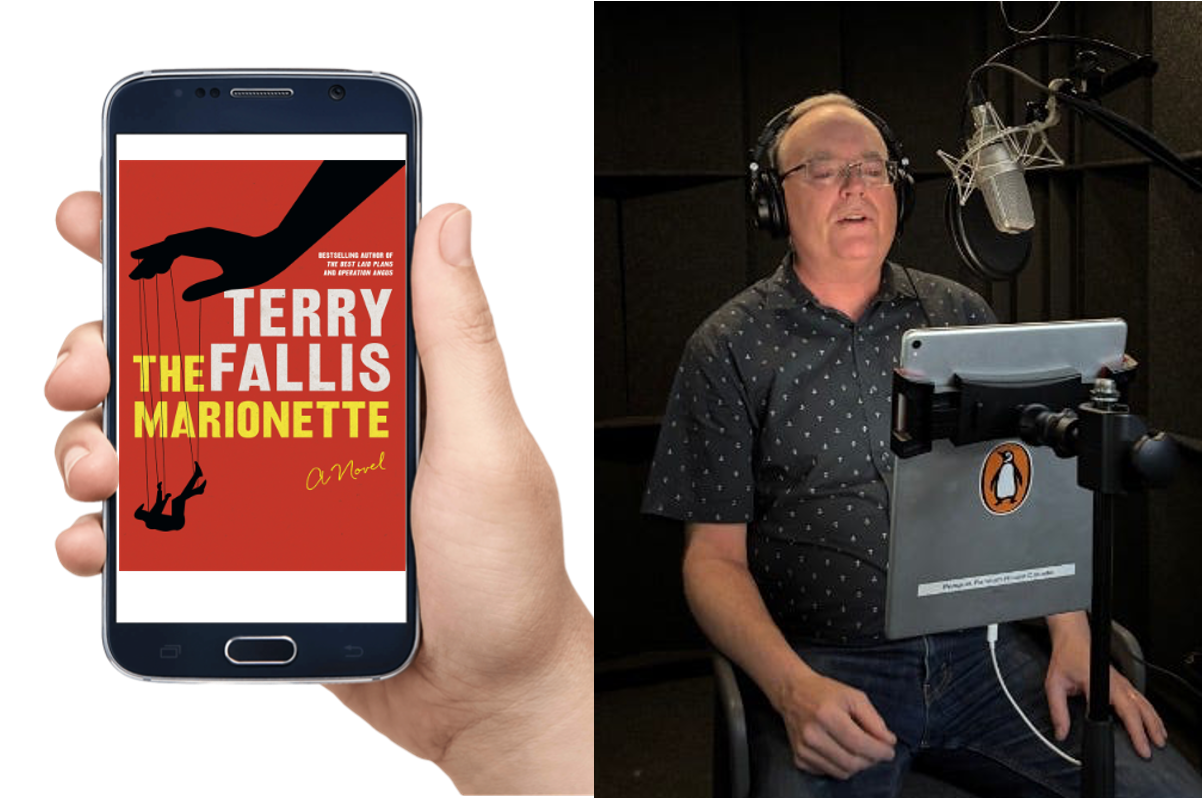
I think writing in a version of my own voice certainly makes it easier for me to narrate my own audiobooks. As I’ve mentioned as recently as my last post, I podcast my first six novels chapter-by-chapter and made them available for free on Apple Podcasts and other directories. And I’ve narrated the official audiobooks for my most recent four novels. Because my narrators tend to be written in my own voice, I hope and trust that they come across as authentic and natural even to listeners who don't know me.
Should aspiring writers try using their own voices?
In some ways, it depends on what they’re writing and whether it’s a first-person narrative. Until my new novel An End in Itself hits bookstores in early November, I’ve only ever written my novels in the first person, which, in my mind, makes it easier to offer my own voice to my narrators. My eleventh novel is written in the third person. This gives the narrative exposition a little distance from the principal character and those around him. Because of this, I’m not really writing the narrative exposition in my own voice, which was a new and interesting experience for me. The voice, by design, is a little more detached.
But for aspiring writers working on first-person narratives, I can’t think of an easier way to add authenticity to their stories than adopting their own voice for their narrators, even though the story is not autobiographical.
Wrapping up…
So now you know that if you read any of my first ten novels, you’ll recognize the narrative voice if we ever happen to meet in person. The conversational tone and style and humour is mine. The narrators are different characters with their own quirks, foibles, gifts, and challenges, but that voice is quite close to mine. I hope that might be one of the reasons the stories feel truthful, plausible, real. I know that voice.
Here’s hoping you’ll subscribe—it’s free and easy—so you don’t miss future posts. Many thanks for checking this out. See you in two weeks.

Well, it's definitely your voice I hear in my head when I read your books!
I'm really interested about your shift to third-person narrative. I write in first-person as well, but I've dabbled with the idea.
Also, the November launch is a shift, no? I can't remember any book of yours launching anytime other than September-ish (though I don't remember when the very early ones launched that well...)
So interesting! Yes, I hear your voice in your narrators, even though they are clearly their own characters. (Well done!) But I'm the complete opposite - I always write in first person, but I want my narrators to have their own voices. I work at that, trying to make them unique to the story I'm writing. Although.... when people who know me read my books, they do say, "I can hear you in this!" So, I guess maybe I'm not doing that great a job! No matter, a good narrator really carries a story, and you definitely have that part of storytelling perfected. (Daniel Addison will always be my fave, though).