

Capturing settings when you can't visit
Writing life: 110

Recently, my good friend and fellow writer, Stewart Goodings—check out his great novel—who divides his time between Comox and Denman Island in BC, emailed me with a suggestion:
“You might want to write sometime about the importance of venue/location in fiction writing and the new online opportunities for doing the research, instead of, or as a supplement to being there 'in person'.”
“Great idea!” I replied. And voilà, a new post written. Thank you, Stewart.
Why is this important?
Well, this is self-evident, but just for the sake of covering all my bases, when you’re writing about your home city, or town, it’s relatively straightforward to describe your setting from a position of authority. In short, it’s easy to write about setting authentically and credibly when you’ve located your story in a place you know well.
But what do you do when you’ve never been to the country you’re writing about, and visiting it is just not in the cards? The trick is to make your readers believe you have in fact spent lots of time in the setting you’re writing about even when you haven’t. But how?
It’s all in the details…
That’s right, the details. I’ve always believed that readers take in specific details as evidence that writers know what we’re writing about. These specific details—sometimes very small details—are inextricably tied to your setting. They represent tangible evidence that the author knows the country, city, village, and/or landscape they’ve chosen as their story’s setting. What the writer is trying to convince the reader to conclude is that “the writer would only know this tiny, very specific detail if he/she had been there.”
But which details and how many?
Ahhh, now this is where you deploy your writerly judgement. You pick and choose these details carefully, and often select smaller, more mundane but specific details to make readers believe not only that you’d visited your foreign settings, but may well have been born there.
But where do you find these details?
If you were writing novels before 1994 or so—and couldn’t visit wherever you’d set your novel—you’d instead visit your local public library and take out a stack of books on whatever countries/cities/villages in which your novel unfolds. It would be a significant, time-consuming, and often Herculean research challenge. (I don’t always give thanks for being born when I was—I still would have liked to have been in Paris in the 1920s—but in this case, I’m grateful.) Now, if you have been writing novels after 1994ish—like I have—you already know where to go to harvest the insights and those little details that will persuade your readers that you spent considerable time in the foreign land in which you set your latest novel. If you can’t jump on a plane, you can always jump online and let your mouse finger do the walking.
Yes, the Internet has made the lives of novelists (and most everyone else) easier in so many ways. (I’m not suggesting the Internet has brought society nothing but sweetness and light, just that it’s made writers lives easier when it comes to research.)
Let me give you two small but concrete examples from my own novels.
One Brother Shy: Scenes in Moscow
A chunk of my sixth novel, One Brother Shy, takes place in Russia, specifically in Moscow and Yaroslavl. As much as I’d like to have visited Russia—this was long before Putin invaded Ukraine—it just wasn’t possible at the time. So my fall back option was to let my mouse guide me through some online exploration. Here are three small research items that became specific details that, if checked—and a few readers will always check them—would be found to be 100 per cent accurate and true.
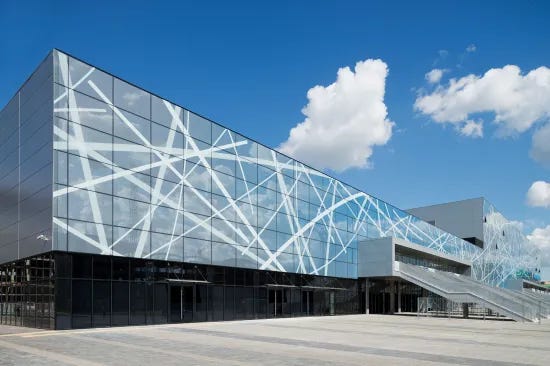
One of my subordinate characters is a Russian hockey historian who works at a hockey history museum in Moscow. In fact, there is a real hockey history museum in Moscow that I discovered courtesy of a google search. In fact, the Russian Hockey Hall of Glory, is located in the VTB Ice Palace a little ways southeast from the downtown core.
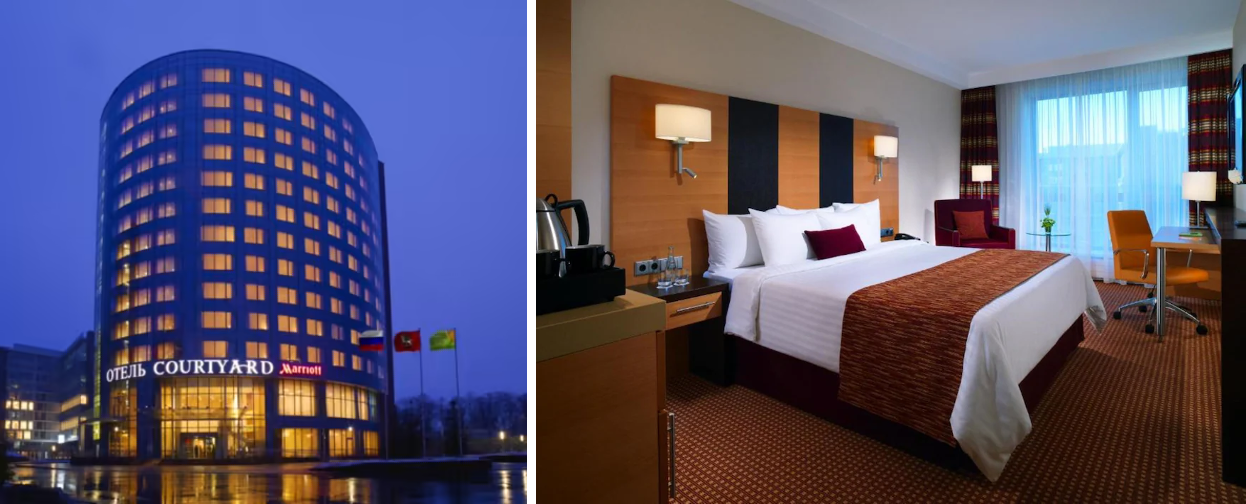
With the address in hand, I then located it on a map of Moscow and did a search for hotels nearby. Eureka, in about five seconds I was able to choose among several hotels in the area. I selected the Courtyard Marriott Moscow Paveletskaya because they have photos on their website and a webcam showing their front entrance and parking circle. I found several little details about the rooms and the hotel lobby and restaurant, and used them in the novel. The other reason I chose this hotel was because it was just a short walk to the Paveletskaya Metro station—part of Moscow’s subway system.
For my characters to travel from their hotel to the museum, my online research revealed that the hockey history museum was located near the Avtozavodskaya Metro station just one Metro stop south of the Paveletskaya station on the other side of the Moscow River. Bingo.
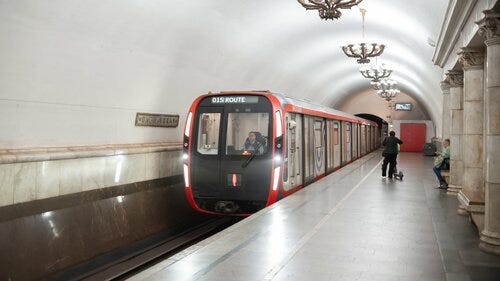
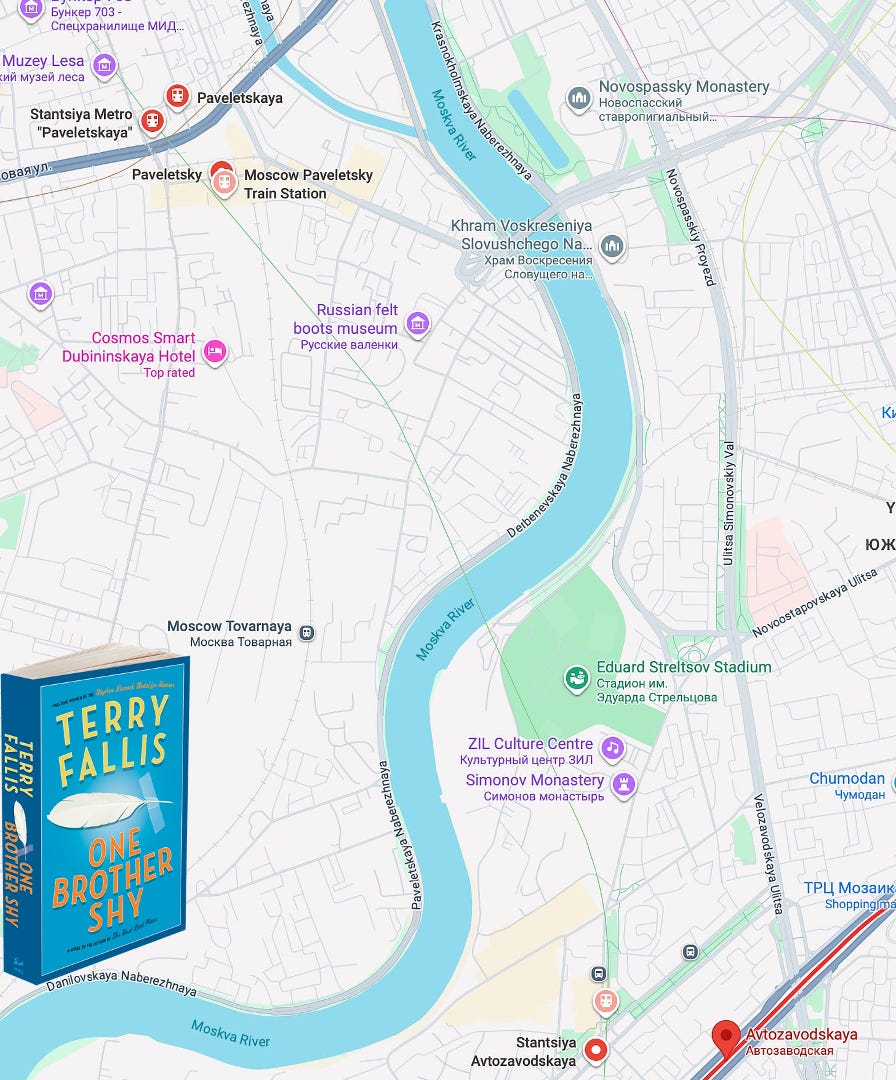
I was able to describe all three of these items (the hockey history museum, the hotel, and the trip on the Metro between the two locations) in some detail courtesy of a high speed Internet connection. In fact, here’s a very short passage from Chapter 9.
The VTB Ice Palace is just a short walk from the Avtozavodskaya Metro station, slightly southeast of downtown Moscow, and conveniently located only one Metro stop south of our hotel. With directions from Vaclav, the hotel concierge, Matt and I easily found the Paveletskaya Metro station and boarded an only moderately crowded southbound train. We stood near the door, holding onto the grab bars conveniently provided.
Page 206, Chapter 9, One Brother Shy
Just by talking about something as minor and specific as the grab bars on the Metro car—which I’d seen when looking at online images of Moscow subway train interiors—I was helping entrench the veracity of the story in my readers’ minds. At readings and festivals I was asked many times by those who had read the book how long I had spent in Moscow “researching” my novel. I took that as a good sign.
The Marionette: Scenes in rural Mali
Part of my current novel, The Marionette is set in the Kéniéba region of Mali in West Africa. Mali is a very unstable country where corruption is rampant, human rights are routinely abrogated, and democratic values have certainly not been warmly embraced by the autocratic regimes in power for decades. It’s a dangerous country that Global Affairs Canada strongly recommends not visiting. So I made no plans to fly to Mali to research this novel. I sat at my computer and let my mouse do the traveling.
Here’s a small example of incorporating accurate local details in the story in an attempt to make the tale more believable and to persuade readers that I know my way around the Kéniéba region in northwest Mali, where, as in the story, there is in fact a Canadian gold mining operation.
In one scene, James and Cooper are being tailed as they walked into the town of Kéniéba, ostensibly for lunch, but in reality to pick up a beat up car arranged by CSIS so they could plan their escape route. As noted in the novel, the road they walk along—the RN24—is, of course, a real road.
They pop into Restaurant Fanta Sow, walk right through the kitchen and out the back door into an alley where their car awaits. Yes, Fanta Sow is a real restaurant in Kéniéba with an alley out the backdoor. It all exists. It’s all true.
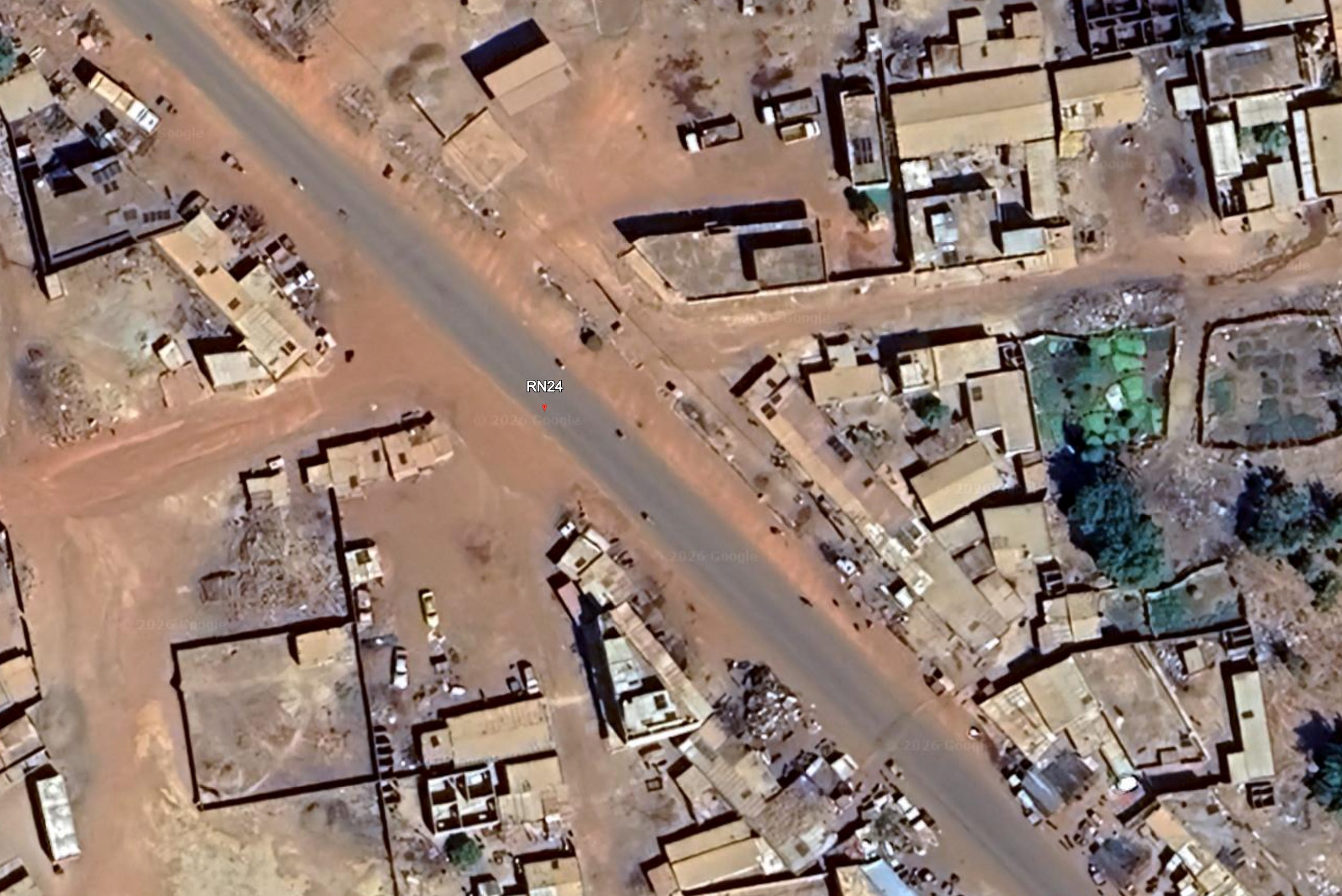
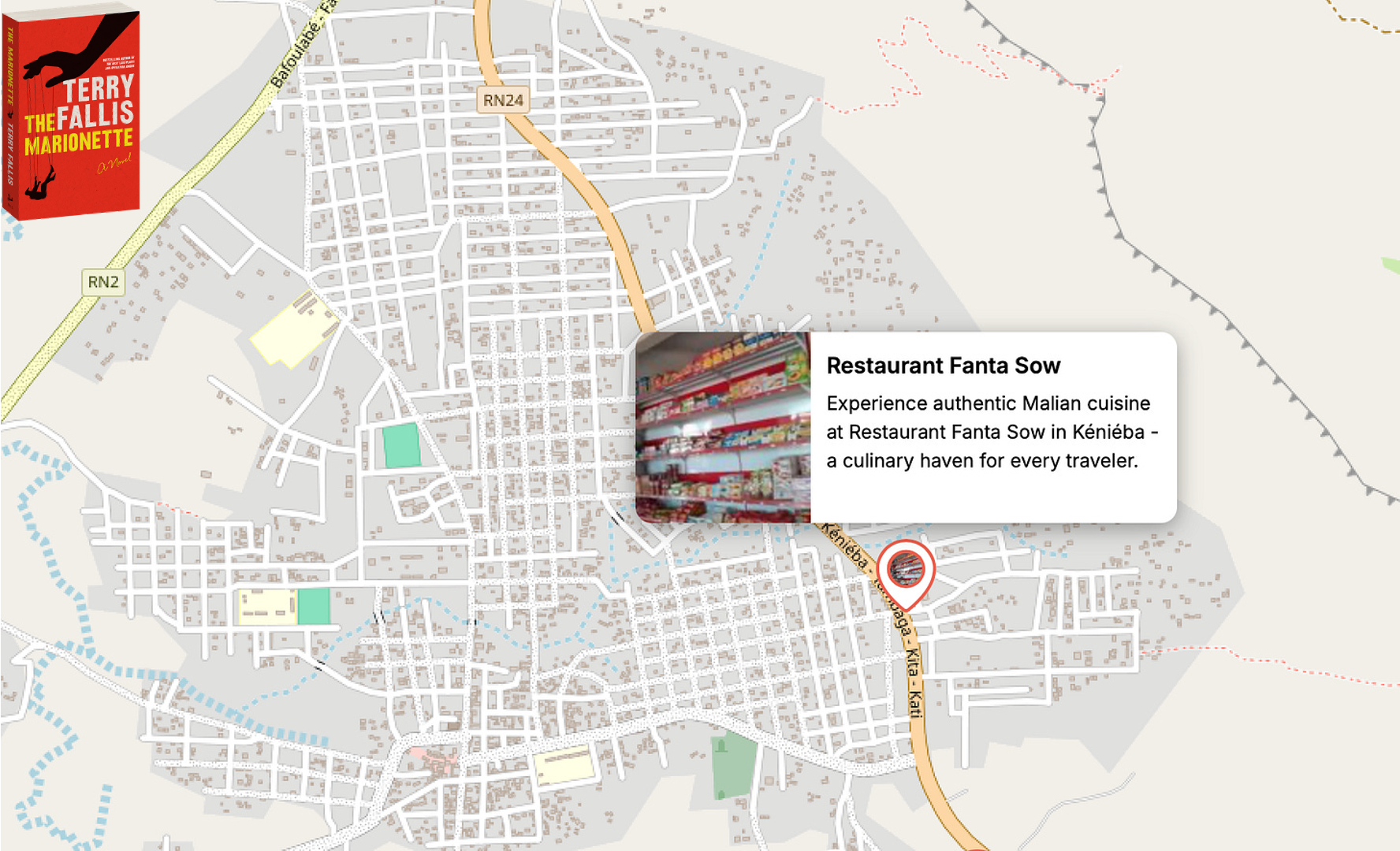
As you can see from the short passage below, the details provided are intended to reinforce the feeling of actually being there with boots on the ground, even though most readers—and certainly the writer—have never set foot there.
We strolled along the righthand shoulder of the RN24 into town. It took us about twenty minutes or so. Perhaps predictably, Kéniéba, much more than Bamako, reflected Mali’s reality as a developing nation, a country still struggling to find herself. A few long-in-the-tooth, low-rise buildings in less than great shape. Slums not far off the main road. An old man herding goats through the streets. Dust in the air. Dilapidated market stalls with sparse offerings. Old, beat-up cars—some running, many not. And again, the dust. It was just how Kéniéba had been described in our initial briefings, so I ought to have expected it. But an antiseptic location briefing in Madrid was just not the same as being right there on the streets.
We reached our destination and walked right through the front door of Restaurant Fanta Sow. Without slowing down we kept moving right past the dining area, into the kitchen—where we nodded to the staff—and then right out the back door into an alley. And exactly where Kiran said it would be, just a little ways down the alley, we found a banged up black Toyota Corolla. Coop reached up under the rear bumper, pulled out the keys and opened the door. No more than ten seconds later, we were driving away from the restaurant with Coop at the wheel. Our guard was nowhere to be seen—just as we’d planned.
Page 185, Chapter 12, The Marionette
Caution
It’s easy to go overboard with your research and cram so many details into your prose that you risk sounding like a cross between a historian and a tour guide. Unless your character is a historian or a tour guide, you don’t want him/her to sound like either. The discerning reader will know that you approached your setting from a researcher’s perspective rather than a storyteller’s. The reader doesn’t need or want ALL the details, but just a few to establish your credibility as one who knows about what and where you're writing. The details are the key. Real names, real locations, real routes with real road names and real highway numbers. All true.
Some readers will fact check and email you
I’m not kidding. This has happened on every novel I’ve ever written. An email will arrive and question something I’ve written even while saying they enjoyed the novel. Sometimes, they might even have a valid, though “hairsplitting” point. This makes it even more important that I’ve done my research assiduously, and carefully sprinkled interesting, and often minor, details throughout the story.
Wrapping up…
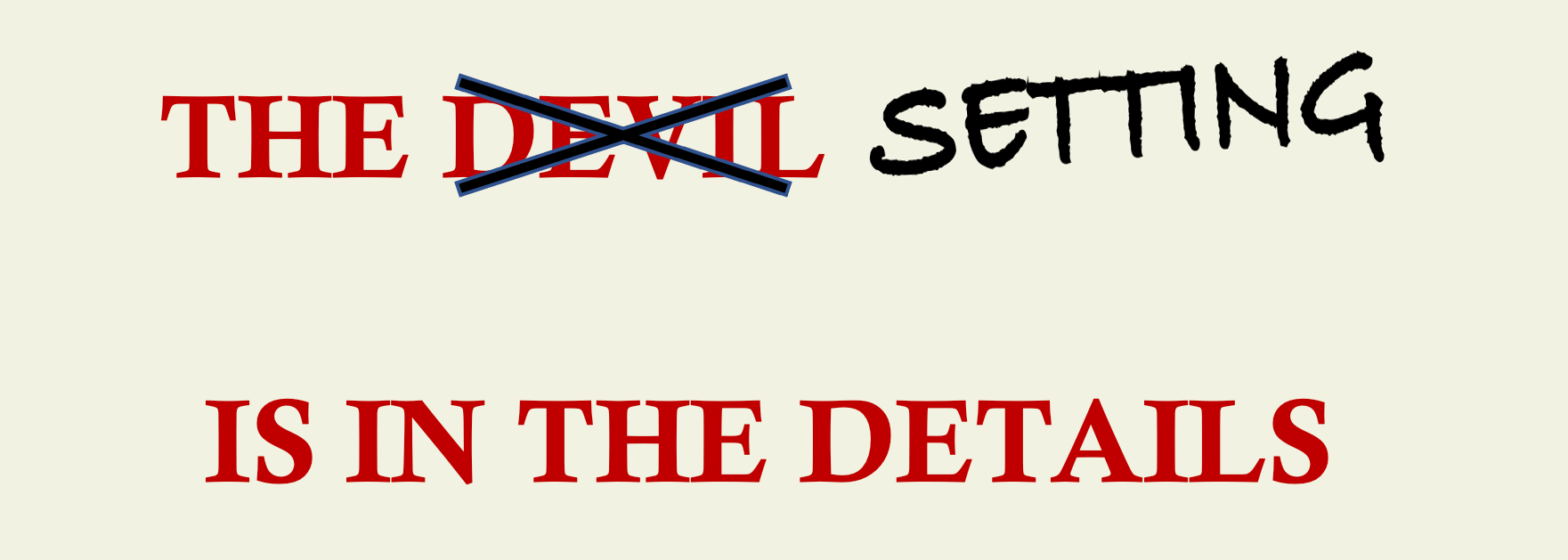
Someone once said “the devil is in the details.” In the case of a novelist, “the setting, along with the writer’s credibility, are in the details”—the right details, not too many, not too few. And sometimes the smallest, seemingly most banal details can be the ones that lock the reader into the story and into a setting they’ve never visited—sometimes just like the writer. Perhaps this topic deserves a companion post about whether “Write what you know” is now out of fashion.
Thanks for reading this far. In the not too distant future, I’ll be revealing the cover of my eleventh novel, An End in Itself—due out in November—so stay tuned.
Here’s hoping you’ll subscribe—it’s free, fast, and easy—so you don’t miss any future posts. Many thanks and we’ll see you in two weeks.

I also did a lot of online research for the setting of my book, "The Legacy", which is set in Rio de Janeiro. When I was talking to a member of a book club one time, she said she had stayed in the same hotel that I had described in my book and told me that she could tell that I'd never actually been there. When I asked her how, she said it was because I hadn't included what it smelled like, which caught me by surprise. Apparently, Rio has a distinctive salt water smell to it. Online research can only take you so far.
In One Brother Shy, there is a passage about the narrator's mother's burial at Beechwood Cemetery in Ottawa, then they try to tail someone through the the next door neighbourhood of Manor Park. As someone who grew up in Manor Park and went to Manor Park PS, your descriptions were vivid and real to me. I was surprised when I asked you about this passage and learned it was all deep research, not direct experience. Impressive!